
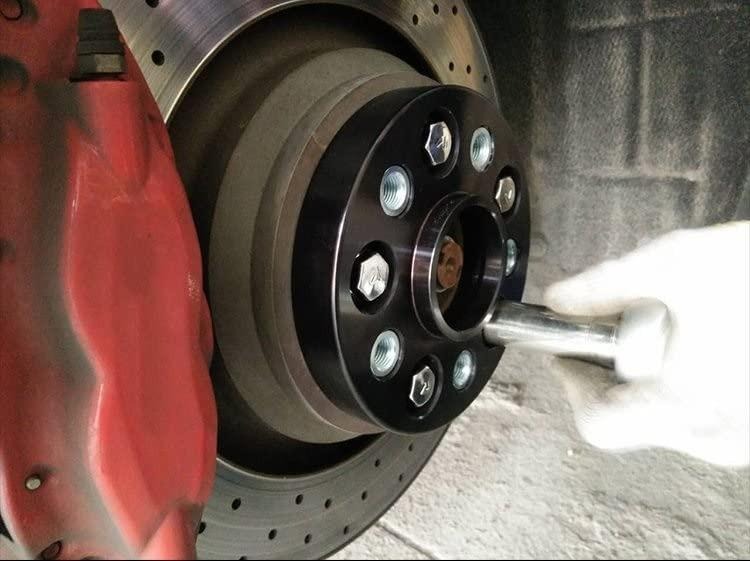
Contemporary performance upgrades extend beyond the realm of aesthetics and concentrate on verifiable engineering upgrades. Track width optimization has emerged as a significant factor for performance enthusiasts in pursuit of enhanced control, stability, and chassis integrity. It is essential to comprehend the integration of such modifications with the overall dynamics of the vehicle to ensure that upgrades are both safe and performance-driven.
Understanding Track Width Dynamics
The distance between the centerlines of wheels of the same axle is called the track width. This indicator has a direct role in controlling stability, cornering confidence, and visual stance. This dimension is usually optimized by engineers to give the vehicle more grip on the road and reduce the body movement during turns.
With the consideration of the adjustments, the outcome is the enhancement of traction and the sense of balance in driving. One of the techniques incorporates the application of Wheel Spacers for Porsche 997, which enables the wheels to be positioned outwards at will, without affecting the fundamental structural components.
The improvement in track width should be in line with suspension geometry and braking systems. Very slight changes may affect steering action and tire tread wear. When planning such upgrades, therefore, precision and compatibility are critical. The systematic approach will guarantee performance enhancement that is both safe and measurable.
How Wheel Spacers for Porsche 997 Influence Track Width
• Improves lateral balance during sharp cornering movements
• Enhances visual stance for refined exterior appearance
• Reduces body roll under dynamic driving conditions
• Supports even tire pressure distribution across surfaces
• Contributes to improved steering precision and driver confidence
Modern mobility solutions demand better control and responsiveness. Wider track alignment allows vehicles to remain composed during sudden directional changes. This improvement supports safety and comfort at the same time. Manufacturers now integrate track optimization within advanced suspension planning to achieve consistent results.
Aesthetic appeal is also achieved by improved positioning. A large number of enthusiasts appreciate a proportional appearance with wheels being drawn in closer to wheel fenders. The results combine the perfection of design and functionality when combined with the quality parts.
FAQ
Does track width influence appearance?
Yes, it affects how wheels align with the body frame.
Is wider always better?
Not always must balance and compatibility guide decisions.
Can it affect ride comfort?
If done correctly, your comfort can remain consistent or improve.
Materials and Structural Compatibility
Selecting appropriate materials is critical when adjusting track dimensions.
• Choose durable alloy construction for long-term reliability
• Ensure corrosion resistance for varied climate exposure
• Confirm bolt pattern compatibility with hub assembly
• Verify load-bearing capacity meets manufacturer standards
• Match thickness precisely to avoid alignment disruption
Material strength ensures safety under pressure. Inferior components may compromise wheel attachment and lead to instability. Proper engineering guarantees consistent force distribution across the hub system.
Compatibility checks reduce the risk of vibration or uneven tire wear. Accurate measurements of offset and clearance protect surrounding parts from stress. Thorough evaluation maintains mechanical harmony while delivering measurable benefits.
FAQ
Why is material quality important?
Strong materials prevent structural failure during high-stress use.
Can the wrong thickness cause issues?
Yes, incorrect dimensions may disturb alignment and steering.
Should the load rating be checked?
Absolutely, it ensures safe support of vehicle weight.
Performance Balance and Engineering Integration
Track adjustments influence several connected systems. Suspension geometry, braking balance, and steering calibration must function together. When widening the stance, engineers analyze camber angles and toe alignment to maintain harmony. A well-integrated system delivers a smooth response without unwanted vibration.
Performance upgrades should never isolate one element from the whole structure. Increasing width affects weight distribution and road contact points. Professional calibration ensures that every modification aligns with factory safety margins. Balanced execution creates enhanced grip while preserving ride quality.
Innovation today combines digital simulation and mechanical testing. Through advanced modeling, designers evaluate outcomes before installation. This approach reduces risk and supports consistent results across different configurations.
FAQ
Does track width affect suspension?
Yes, it changes geometry and must be recalibrated.
Can braking performance change?
Improper adjustments may influence braking balance.
Is simulation useful?
Digital modeling helps predict performance outcomes accurately.
Long-Term Safety of Wheel Spacers for Porsche 997
• Regular inspection maintains secure bolt fastening integrity
• Balanced torque application prevents uneven stress buildup
• Periodic alignment checks preserve tire longevity
• Quality installation reduces vibration risks over time
• Professional assessment protects surrounding suspension elements
Long-term safety depends on routine evaluation. Proper torque ensures equal pressure distribution across mounting points. Maintenance protects components from gradual wear and mechanical strain.
Consistent monitoring of alignment avoids premature tire degradation. With expert oversight, track width enhancements can remain reliable for extended periods. Stability improvements continue without sacrificing durability.
FAQ
How often should components be checked?
Routine inspections during service intervals are recommended.
Can vibration indicate a problem?
Yes, vibration may signal improper fitting or imbalance.
Is maintenance expensive?
Preventive care usually avoids costly repairs later.
Modern Innovation and Design Evolution
Contemporary mobility design values both functionality and style. Engineers pursue wider stance strategies to enhance cornering confidence while maintaining refined comfort. Integration of lightweight alloys and precise manufacturing techniques ensures durability without excessive mass.
Digital planning tools support accurate measurement and installation processes. These innovations allow performance refinement without compromising safety standards. Track width enhancement reflects a broader shift toward balanced engineering solutions that prioritize control and visual harmony.
Design evolution continues to merge structural strength with aesthetic refinement. Thoughtful adjustments demonstrate how subtle dimensional changes can redefine driving dynamics. When managed carefully, these upgrades align with modern innovation goals.
FAQ
Are track upgrades part of innovation?
Yes, they support improved balance and handling refinement.
Do lightweight materials matter?
Reduced mass enhances efficiency and response.
Can design and function coexist?
Modern engineering aims to balance both aspects.
Smart Performance Path
Track width refinement reshapes stability, stance, and structural synergy in measurable ways. Careful assessment of geometry, material strength, and torque accuracy ensures dependable operation. Routine inspection preserves system harmony while preventing imbalance or vibration.
When aligned with engineering standards, dimensional expansion strengthens road grip and directional control. Thoughtful planning transforms a simple adjustment into a strategic upgrade. Solutions such as Wheel Spacers for Porsche 997 illustrate how precise components integrate with modern design thinking. A balanced method delivers durability, controlled response, and confident movement across diverse driving conditions.