

In today’s world, a GPS navigation system is essential for a driver. Whether part of the dashboard or just a smartphone away, GPS ensures people can get from point A to point B with the least amount of effort.
But what happens when following that soothing voice or screen instructions leads to distraction and, ultimately, a crash? Pinpointing blame isn’t always simple. Several parties may play a role, from the driver to the road maintainers.
Let’s examine more closely who may be liable when a driver gets distracted by GPS.
The Driver
The majority of the time, the responsibility of driving safely rests of the driver. When someone gets in the driver’s seat, he assumes the legal and moral responsibility to keep his attention fixed on the road.
Distracted driving, regardless of the source, can cause accidents, and the driver is generally held responsible for them in a court of law. GPS devices are supposed to help, not do the driving for you.
Therefore, if a driver is distracted by the screen or has misinterpreted a GPS instruction, or attempts to reprogram it while driving, a court may find them to be negligent.
Many areas have laws specifically prohibiting the use of electronics while driving. This strengthens the legal case against distracted drivers and can help prove that distraction caused the accident.
The Vehicle Manufacturer
Some might argue that automakers who build GPS units into vehicles should ensure they are designed to minimize distraction.
In rare cases, a motor vehicle manufacturer may share in the liability when the GPS interface is poorly designed or unnecessarily complicated to use while operating a motor vehicle.
If a system enables complex inputs that take too much of a driver’s attention off the road, it could be seen as flawed in design terms.
However, such cases are rare and hard to prove. Many auto manufacturers take stiff safety precautions, including warnings advising drivers to use navigation systems only while parked.
Another Driver
Is it possible for a GPS accident to be the other driver’s fault? Yes, particularly if their actions caused the GPS distraction to be a hazard.
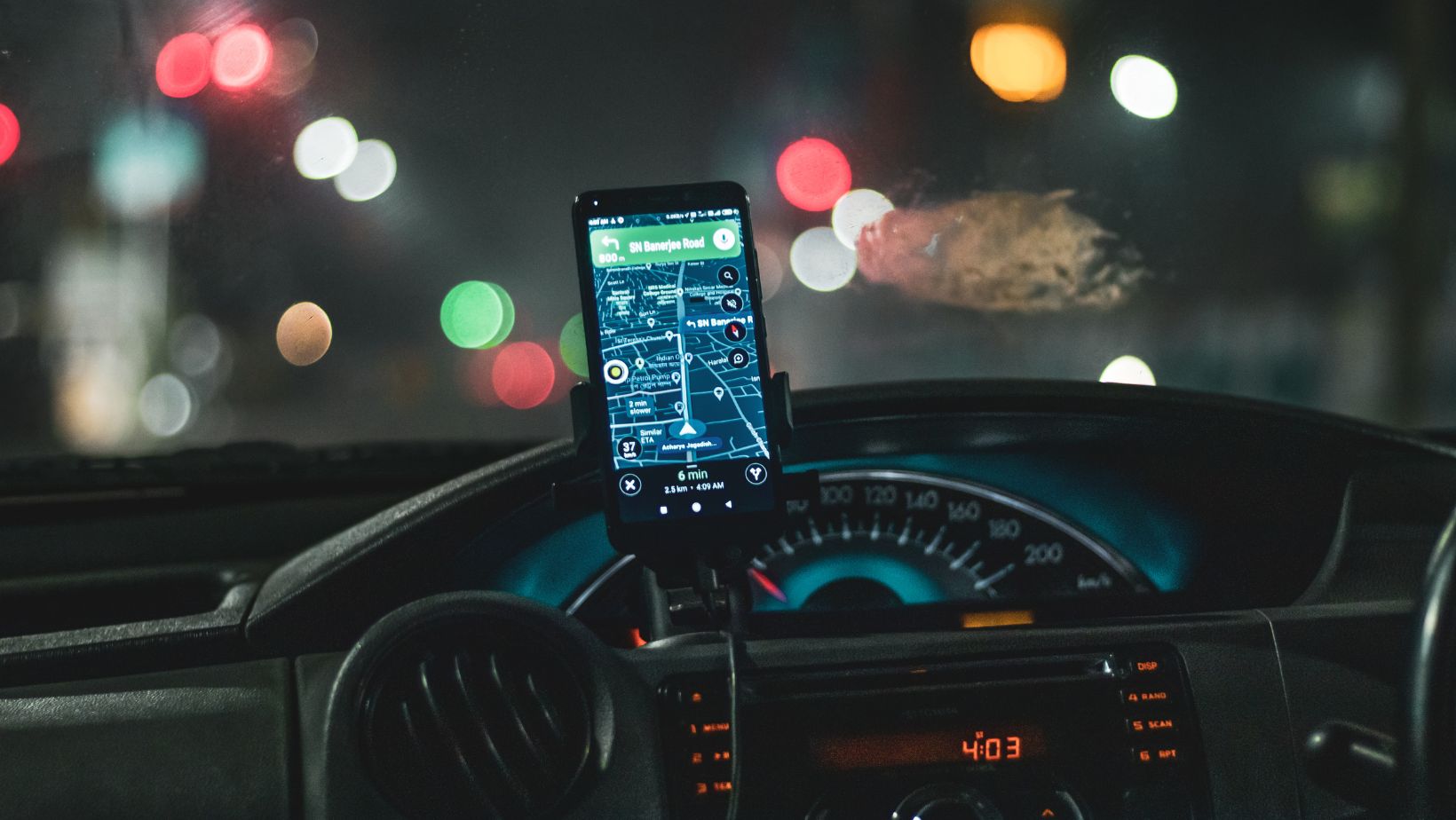
For instance, if somebody cuts someone else off or suddenly jams on the brakes, and the GPS user reacts on a whim and winds up in a car crash, it may be the fault of unclear GPS directions.
In this case, the GPS distraction may only result from the other driver’s negligence.
Road Authorities
In some cases, poor road signage or confusing detours may amplify a driver’s reliance on GPS. If a road authority fails to adequately warn a motorist about a closed exit or an abrupt lane merge, a driver may be unaware and entirely defer to the GPS to determine what to do next.
Although public road maintainers typically enjoy government immunity, they can occasionally be held responsible for accidents in a case of gross negligence.
An example would be a changed road layout not adequately signaled and causing several accidents subsequently initiating a claim against the authority which made the change.
A Passenger
Although passengers are not usually involved in driving the car, their actions may influence the driver’s attention. If a passenger urges the driver to glance at the GPS or reaches over to make an adjustment, they could be contributing to the distraction.
In civil cases, particularly those related to insurance claims, a passenger’s participation may be taken into account if there is evidence that their conduct caused the driver to be distracted.
Conclusion
When a GPS-related distraction leads to an accident, the blame falls on the driver. However, the overall picture may involve a web of contributing factors, such as faulty system design, confusing road conditions, the influence of other drivers, and, in some cases, passengers.
Thus, having a GPS is helpful but does not prevent drivers from remaining alert while on the road.