
For more than four decades, the Mercedes-Benz G-Wagon has earned its place as one of the most respected off-road vehicles in the world. Built originally for military duty and later embraced by enthusiasts, adventurers, and collectors, the classic G-Wagon has long represented durability and mechanical integrity. Yet today’s automotive landscape is shaped by a new priority: sustainability. As electric drivetrains, cleaner fuels, and circular-economy thinking become mainstream, the question arises—where does a timeless machine like the G-Wagon fit into the future of sustainable mobility?
The answer lies not in replacing the classic G-Wagon, but in understanding how its rugged design, long lifespan, and adaptability allow it to evolve into a future where sustainability and engineered heritage coexist.
Why the Classic G-Wagon Still Matters in a Sustainability-Focused Era
At first glance, a boxy 40-year-old 4×4 may not seem compatible with modern sustainability goals. But the classic G-Wagon offers several advantages that align with long-term environmental thinking.
Built for Longevity, Not Disposal
The earliest G-Wagons were constructed with over-engineered mechanical systems, durable steel bodies, and a ladder-frame chassis built to sustain decades of hard use. In a world overwhelmed by disposable products, longevity becomes its own form of sustainability. A vehicle that lasts 30–40 years or more reduces the environmental cost tied to manufacturing new vehicles.
A Cultural Icon Worth Preserving
Unlike many vehicles that fade into obsolescence, the G-Wagon carries cultural and historical value. Preserving a classic isn’t just about nostalgia—it prevents scrappage, contributes to the circular economy, and keeps high-quality machines on the road instead of in landfills.
Sustainability Through Preservation, Not Replacement
One of today’s overlooked environmental truths is that manufacturing a new vehicle—even an electric one—contributes significantly to carbon emissions. Steel production, battery mining, plastic fabrication, and global logistics all play a role. Choosing to restore a classic G-Wagon instead of replacing it with a new model can drastically reduce a driver’s overall environmental footprint.
Restoration as Sustainable Practice
A restored classic keeps far more material in circulation. Frame-off restorations rebuild the vehicle from the ground up, replacing worn components and upgrading key systems without discarding the entire structure.
High-quality, frame-off restorations—such as the custom builds offered by Expedition Motor Company—extend the lifespan of classic G-Wagons while reducing the environmental impact associated with new vehicle production.
Upcycling Over Manufacturing
Upcycling—reusing and improving existing vehicles—prevents waste and makes restoration a legitimate part of sustainable mobility. When classic G-Wagons receive modernized engines, upgraded exhaust systems, or cleaner-running components, they move closer to eco-friendly performance without the environmental cost of building a new SUV from scratch.
Electrification Potential: Can the Classic G-Wagon Go Electric?
Perhaps the most exciting frontier for classic vehicles is electrification. EV conversions are becoming increasingly popular among collectors and sustainability-conscious drivers, and the G-Wagon is uniquely suited for this transformation.
A Strong Platform for EV Swaps
The ladder-frame chassis provides ample structural durability and a clear mounting structure for battery packs. With plenty of underbody space and heavy-duty axles, the G-Wagon can accommodate electric motors without compromising its legendary off-road capabilities.
Torque Benefits of Electric Power
Electric motors deliver instant torque—a major advantage in off-road situations. A converted electric G-Wagon would not only reduce emissions but also enhance performance on steep climbs, rocky terrain, and mud-heavy routes.
Challenges and Considerations
Battery placement, cooling systems, weight distribution, and range are ongoing engineering challenges. However, with rapid advancements in battery technology and EV conversion kits, future-proofing a classic G-Wagon through electrification is becoming more attainable each year.
Sustainable Fuels and Modern Powertrain Alternatives
Electrification is not the only sustainable path available.
Biofuels and Synthetic Fuels
Biofuels made from organic matter and synthetic fuels created through carbon-neutral processes offer immediate solutions for classic vehicles. These fuels can significantly reduce emissions without requiring a full powertrain replacement.
Modern Diesel and Hybrid Retrofits
Cleaner diesel engines and mild-hybrid retrofits can decrease fuel consumption and emissions. They also maintain the torque-heavy performance demanded by off-road enthusiasts.
Evaluating Long-Term Viability
Each route—EV, biofuel, or hybrid—has its own environmental trade-offs. But they all offer pathways for classic G-Wagon owners to align their vehicles with cleaner mobility trends.
How Classic G-Wagon Owners Can Support a Greener Future
Sustainable mobility isn’t only about technology—it’s also about responsible use.
Eco-Friendly Maintenance
Installing improved catalytic converters, using low-emission lubricants, and ensuring regular engine efficiency checks can reduce a classic’s environmental impact.
Modernized Driving Practices
Avoiding unnecessary idling, maintaining proper tire pressure, and minimizing aggressive acceleration all contribute to a lower carbon footprint.
Choosing Restoration Over Replacement
Opting for restoration rather than buying new preserves resources and strengthens the circular-economy mindset central to sustainability.
What the Future Looks Like for the G-Wagon in Sustainable Mobility
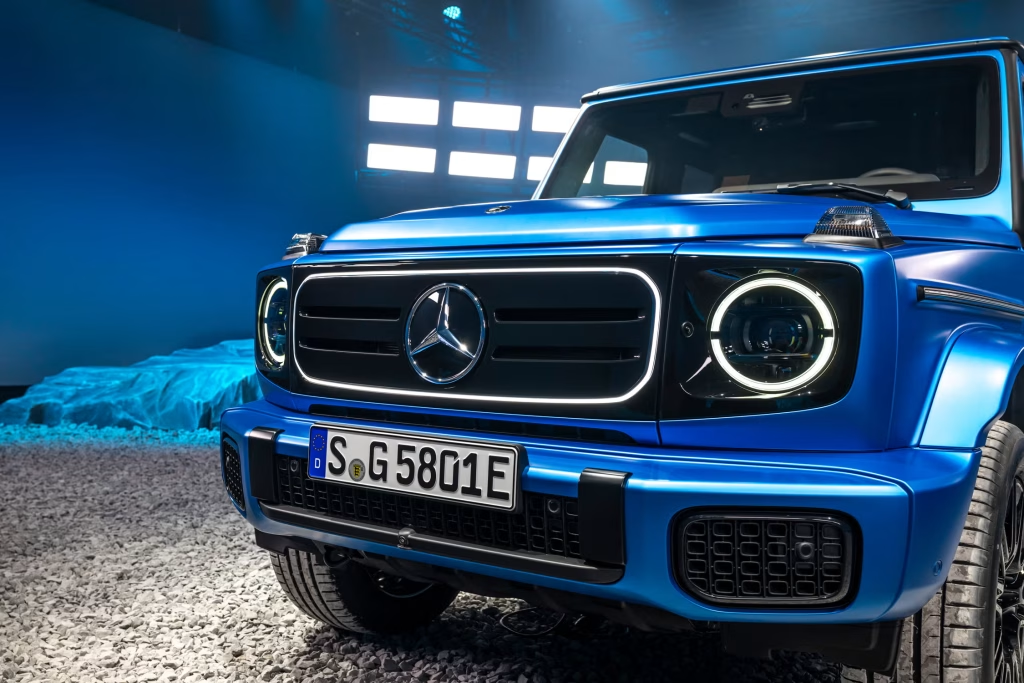
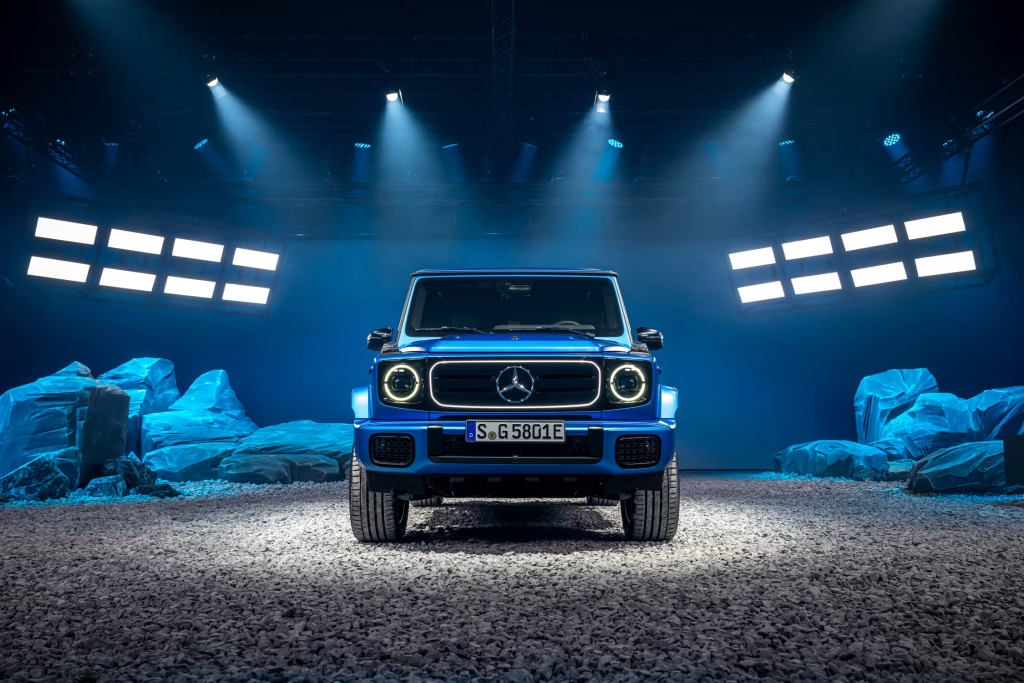
Mercedes-Benz has already signaled the direction of future mobility with the upcoming electric EQG. This shift suggests that even iconic vehicles can evolve with the times. Classic G-Wagons are poised to coexist in a future shaped by EVs, thanks to their durable construction and adaptability.
Through restoration, electrification, and cleaner fuels, these legendary machines can continue their journey while aligning with global sustainability goals.
Conclusion: A Bridge Between Heritage and the Future
The classic G-Wagon stands at a rare intersection between old-world craftsmanship and modern sustainability expectations. Its longevity, structural integrity, and adaptability make it a strong candidate for evolving alongside the future of mobility. Whether through responsible restoration, electrification, or sustainable fuels, the classic G-Wagon is proving that heritage vehicles can be part of a greener tomorrow—not relics of the past.