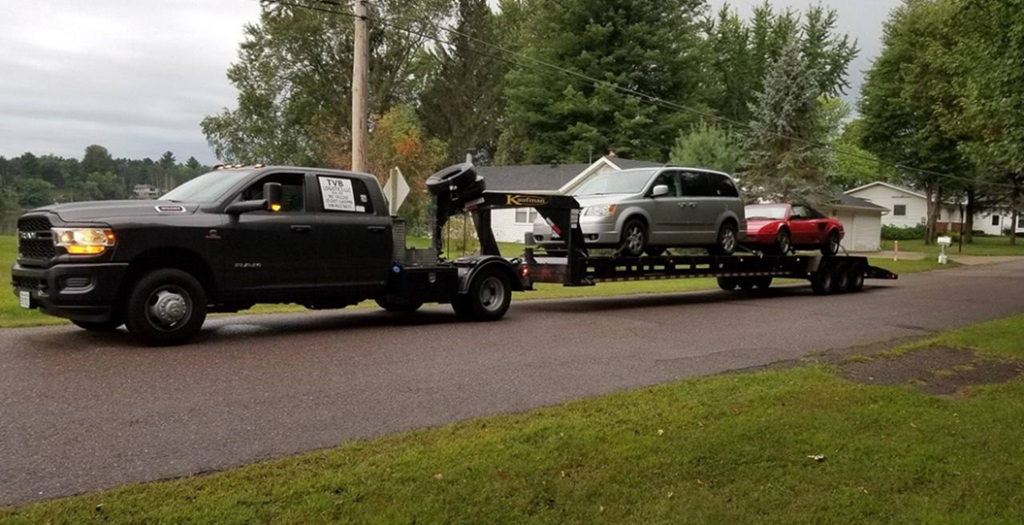
For many people, the door-to-door car shipping service process is straightforward: a major firm arrives at their driveway, loads the car, and drives off. On the other side, the same truck comes directly to the residence and unloads the car. At times, it is just that way. But door-to-door car shipping doesn’t necessarily mean a transport truck can physically access the front door.
Auto carriers are much larger than standard passenger vehicles, and access is possible only on very narrow streets, under low bridges, with parking restrictions, in gated communities, during construction, or with local restrictions.
This guide defines what door-to-door car shipping is, why a carrier might want to use a local address, how major cities can add more complexity, and what customers can do to make shipping easier.
What Does Door-to-Door Car Shipping Actually Mean?
Door-to-door car shipping involves the car transport company making arrangements to pick up and deliver the vehicle as close as possible to the customer-provided addresses.
While in terminal-based shipping, the customer needs to drive to a specific location to pick up or drop off the vehicle, in door to door transport, the goal is to minimize the number of trips the vehicle owner needs to make.
Customers generally provide:
-
Pickup address
-
Delivery address
-
Vehicle details
-
Preferred shipping dates
-
Contact information
-
Special access instructions
The carrier then checks whether the areas can accommodate a commercial auto transport truck. Hence, the important point is that door-to-door describes the intended service arrangement, not a guarantee that the truck will park directly in front of every property.
Why Can’t an Auto Carrier Always Reach Your Door?
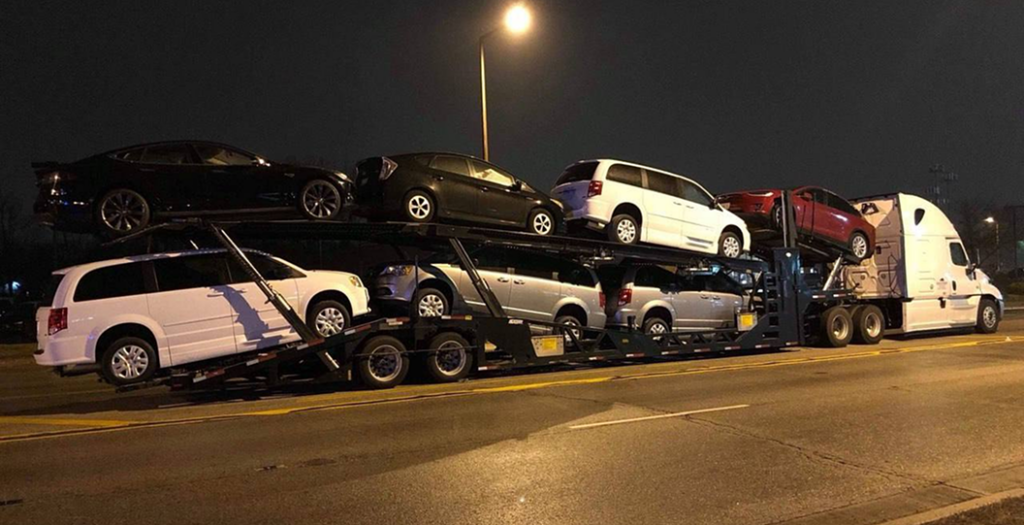
An ordinary sedan can travel through many residential streets without difficulty. A multi-vehicle transport carrier is an entirely different kind of vehicle. Auto carriers require more space for turning, braking, positioning, loading, and unloading.
They must also consider height, width, length, and weight. What may seem like a straightforward route for a normal-sized passenger car might not be appropriate for a large commercial vehicle.
Narrow Residential Streets
In some neighborhoods in the USA, the width of the streets is insufficient for large vehicles to pass. Issues can occur if streets have:
-
Vehicles parked on both sides of the road
-
Tight corners
-
Cul de sacs
-
Narrow intersections
-
Overhanging trees
-
Traffic calming features
-
Closely spaced buildings
When the driver is unable to maneuver, the driver can request that the customer move to a nearby wider street where it is safe for the carrier to operate.
Low Bridges and Overhead Obstacles
Another important factor to consider is height. Transport Carriers should consider clearance around:
-
Bridges
-
Tunnels
-
Utility lines
-
Tree branches
-
Traffic signals
-
Building structures
A typical GPS routing program may not consider all the constraints for a commercial carrier. That’s why professional drivers prefer to use a route other than what a traditional navigation app recommends.
Weight Restrictions
Some roads have restrictions on heavy commercial vehicles. These can be especially relevant in older residential areas, private communities, and smaller local roads. Even if the road is physically wide enough, its weight restrictions may prevent a large carrier from using it.
Why Major U.S. Cities Can Make Delivery More Difficult
Urban areas can present unique challenges for auto transport. Large U.S. cities often have heavy traffic, limited parking, one-way streets, construction zones, pedestrians, cyclists, and strict parking rules.
For example, NYC Government provides official information from the City of New York about transportation, streets, parking, and related city services. These conditions matter because an auto carrier needs more than an address. It needs enough physical space to safely approach, stop, load, and leave.
Downtown Locations
Downtown areas can be particularly challenging. A carrier can encounter:
-
Heavy congestion
-
Limited loading areas
-
One-way streets
-
Temporary road closures
-
Construction
-
Restricted parking
-
Pedestrian traffic
As a result, a customer in a busy urban district may be asked to meet the carrier at a more accessible location nearby.
Apartment Complexes Can Create Access Problems
Apartment buildings are another common example. A customer may provide the exact address of an apartment complex, but the carrier might not be able to enter the property. Potential obstacles include:
-
Underground parking garages
-
Low garage entrances
-
Security gates
-
Narrow internal roads
-
Sharp turns
-
Resident-only parking
-
Weight restrictions
Even if the carrier can enter through the main gate, there may not be enough space to maneuver inside the property. In these situations, the driver may arrange pickup or delivery near the entrance or on a wider public street.
Customers should provide information about apartment access when booking, rather than assuming the carrier can automatically enter the apartment.
Gated Communities Present Similar Challenges
Gated communities might appear convenient from the outside but can pose logistical challenges. The driver must be familiar with the following:
-
Gate opening hours
-
Security procedures
-
Vehicle height restrictions
-
Access codes
-
Visitor policies
-
Road width
-
Loading restrictions
If a carrier cannot enter safely, the driver and customer can usually arrange an accessible meeting point outside the community. Avoiding delays to the process by providing these details in advance.
What Happens When the Carrier Cannot Reach the Address?
The answer typically lies in identifying a safe, local place. So, the driver can suggest:
-
A broader street for residences.
-
A commercial road that is close by.
-
A large parking area.
-
An appropriate public meeting place.
-
An accessible intersection.
The situation at hand determines the exact site. Managers must remember that safety is the customer’s responsibility, not the carriers’, and that the driver is the person the customer is supposed to communicate with.
Trying to push a large carrier into an area where there is not enough room for it to maneuver safely can damage property, cause a nuisance, or create a hazard to both the carrier and others.
Why Safety Comes Before Convenience
It can initially seem inconvenient when a driver cannot reach the exact address. However, safety has to come first. A transport carrier carrying multiple vehicles has different operating requirements from a normal car. The driver must consider:
Vehicle Dimensions
The carrier needs sufficient space to turn and maneuver without striking vehicles, buildings, signs, or other objects.
Loading Space
The driver needs appropriate room to load or unload the vehicle safely.
Traffic
Stopping a large carrier on a busy road can create risks for motorists and pedestrians.
Local Rules
Parking and commercial vehicle restrictions may affect where the carrier can legally stop. For these reasons, a nearby accessible location may actually be the better option.
Door to Door vs Terminal to Terminal Shipping
Door-to-door transport is not the only option available to U.S. vehicle owners.
Terminal-to-terminal shipping requires customers to take their vehicles to a designated transport facility and collect them from the destination facility. On the other hand, door-to-door service can be more convenient because it reduces the amount of travel required of the customer. Terminal arrangements may nevertheless be useful when:
-
A residential address is inaccessible
-
The customer cannot be present at home
-
Temporary vehicle storage is required
-
A terminal is conveniently located
-
Local roads cannot accommodate the carrier
Neither option is automatically better for every shipment. The right choice depends on the vehicle, locations, timing, and customer’s circumstances.
What Information Should Customers Provide?
Accurate information helps transport companies plan more effectively. When requesting a quote, customers should mention anything that can affect access. For example:
-
Narrow streets
-
Gated entrances
-
Low bridges
-
Apartment complexes
-
Downtown locations
-
Parking restrictions
-
Steep driveways
-
Local weight restrictions
-
Construction near the property
The more information the transport provider has, the easier it is to anticipate possible access problems.
Choosing a Safe Alternative Pickup Location
If the carrier cannot reach the exact address, the alternative location should provide enough room for the truck and customer. A suitable location should ideally have:
-
Wide road access
-
Plenty of space
-
Good visibility
-
Legal parking
-
Minimal traffic
-
Sufficient loading space
-
A safe place to inspect the vehicle
Large parking areas and wider commercial streets can sometimes work better than narrow residential roads. However, customers should not assume that every parking lot is available. Private property may have restrictions, so permission may be required.
Does Door-to-Door Shipping Cost More?
There is no single price for door-to-door auto transport. The final cost can depend on several factors, including:
-
Shipping distance
-
Vehicle size
-
Vehicle condition
-
Pickup location
-
Delivery location
-
Open or enclosed transport
-
Seasonal demand
-
Route availability
-
Fuel costs
-
Special handling requirements
An inaccessible location can also create logistical complications if the carrier needs to use an alternative meeting point or modify the planned route. The best way to receive an accurate estimate is to provide the complete pickup and delivery information when requesting a quote.
What If the Vehicle Does Not Run?
An inoperable vehicle requires additional planning. Tell the transport provider if the vehicle:
-
Will not start
-
Cannot steer
-
Has flat tyres
-
Has damaged wheels
-
Has brake problems
-
Cannot roll
-
Requires special loading equipment
The carrier may need a winch or other equipment to load the vehicle. Hence, the pickup location becomes even more important because the driver needs enough room to position the equipment safely. Failing to disclose that a vehicle is inoperable can lead to delays and unexpected complications.
How Weather Can Affect Door-to-Door Delivery
Weather can also influence pickup and delivery. Heavy snow, ice, flooding, severe storms, and strong winds can create dangerous conditions for large carriers. In extreme situations, a driver may need to:
-
Delay the shipment
-
Change the route
-
Select another meeting point
-
Wait for conditions to improve
A delay can be frustrating, but safety should remain the priority. Large carriers carrying multiple vehicles require careful handling, especially during poor weather.
Why Standard GPS Is Not Always Enough
Navigation applications are useful, but auto transport requires more detailed route planning. A standard navigation app may not fully account for the dimensions or restrictions affecting a commercial carrier. Transport professionals may need to consider:
-
Bridge clearance
-
Weight limits
-
Road width
-
Construction
-
Traffic conditions
-
Commercial vehicle restrictions
-
Safe loading areas
-
Local access
Consequently, a driver may choose a route that appears longer but is more appropriate for the carrier. The fastest route for a passenger car is not necessarily the safest route for an auto transport truck.
How Customers Can Make Pickup Easier
Customers can take several simple steps before pickup. Make sure:
-
The vehicle is accessible
-
Personal belongings are removed
-
The vehicle’s condition is documented
-
The keys are available
-
Required documents are ready
-
The driver’s contact details are available
-
Access instructions have been provided
If you know your street has limited access, tell the transport company in advance.
Conclusion
Door-to-door car shipping is one of the most convenient ways to transport a vehicle across the United States, but it does not always mean that a large carrier will pull directly into your driveway.
Narrow streets, low bridges, traffic, parking rules, gated communities, apartment complexes, construction, weather, and vehicle restrictions can all affect where a carrier can safely stop. In these situations, a nearby meeting point may be necessary. This is not necessarily a problem or a failure of the service. It is often the safest and most practical solution.
FAQs
1. Does door-to-door car shipping guarantee driveway pickup?
No. The carrier will generally try to get as close as reasonably possible, but road width, parking restrictions, vehicle size, bridges, and local regulations may prevent direct driveway access.
2. What happens if my street is too narrow for a car carrier?
The driver will typically work with you to identify a nearby location where the carrier can safely stop and load or unload the vehicle.
3. Can a car carrier deliver to an apartment complex?
Possibly. It depends on access, road width, gate restrictions, parking, height clearance, and space available for the carrier. If access is unsuitable, delivery may take place nearby.
4. Is door-to-door shipping better than terminal shipping?
Door-to-door shipping is often more convenient because the customer does not have to drive to a terminal. However, terminal shipping can be useful when a residential location is difficult to access.
5. Should I tell the transport company about road restrictions?
Yes. Providing information about narrow streets, gates, low bridges, construction, steep driveways, or parking restrictions can help the carrier plan the shipment properly.