

Proving fault is one of the most important aspects of an auto accident case.
If there’s no fault, there’s no case. It doesn’t matter how badly someone was injured or how much damage was done to a car…
If fault can’t be proven, no compensation will be awarded.
Now, here’s the good news:
There are a number of strategies that have been proven to work. Knowing them is what can make the difference between winning and losing an auto accident lawsuit.
In this post, we’ll take a look at the most effective strategies for proving fault in auto accident cases. Let’s get right to it.
What you will learn
- Elements of Fault in Auto Accident Cases
- How to Prove Fault in Auto Accident Cases
- Why it Matters to Prove Fault in Auto Accident Cases
- Strategies for Proving Fault in Auto Accident Cases
- When It Makes Sense to Work with Auto Accident Lawyers
Elements of Fault in Auto Accident Cases
Fault in an auto accident case is actually quite simple. Legally speaking, at the heart of proving fault in auto accident cases is negligence.
Negligence is the failure to drive with a reasonable amount of care. That could be running a red light or stop sign, texting while driving, or driving too fast in a school zone, for example.
But here’s the thing…
It’s not enough to just say that someone was negligent. That has to be proven. The evidence has to be strong enough to hold up in a courtroom or during a settlement negotiation.
The legal standard breaks negligence down into four elements: the other driver had a duty of care, they breached that duty, the breach caused the accident, and damages resulted from the accident.
Fail to prove any one of those and the case crumbles.
For that reason, this is why working with experienced car accident injury lawyers becomes so important when it comes to complex auto accident cases. They know how to build a winning case that meets all four requirements.
How to Prove Fault in Auto Accident Cases
Before diving into specific tactics and techniques, it’s helpful to understand why proving fault in auto accident cases matters in the first place.
Here’s a stat you might not realize…
According to the NHTSA, there were an estimated 39,345 people killed in motor vehicle traffic crashes in 2024. That is an absolutely astounding number of lives lost on American roads.
The overwhelming majority of these accidents were avoidable.
In fact, statistics have found that 94% of car crashes are the result of human error. Driver negligence is to blame in nearly every case.
Proving that negligence then determines:
- Who pays the medical bills
- Who pays for vehicle repairs
- Who is liable for lost wages
- Who is liable for pain and suffering
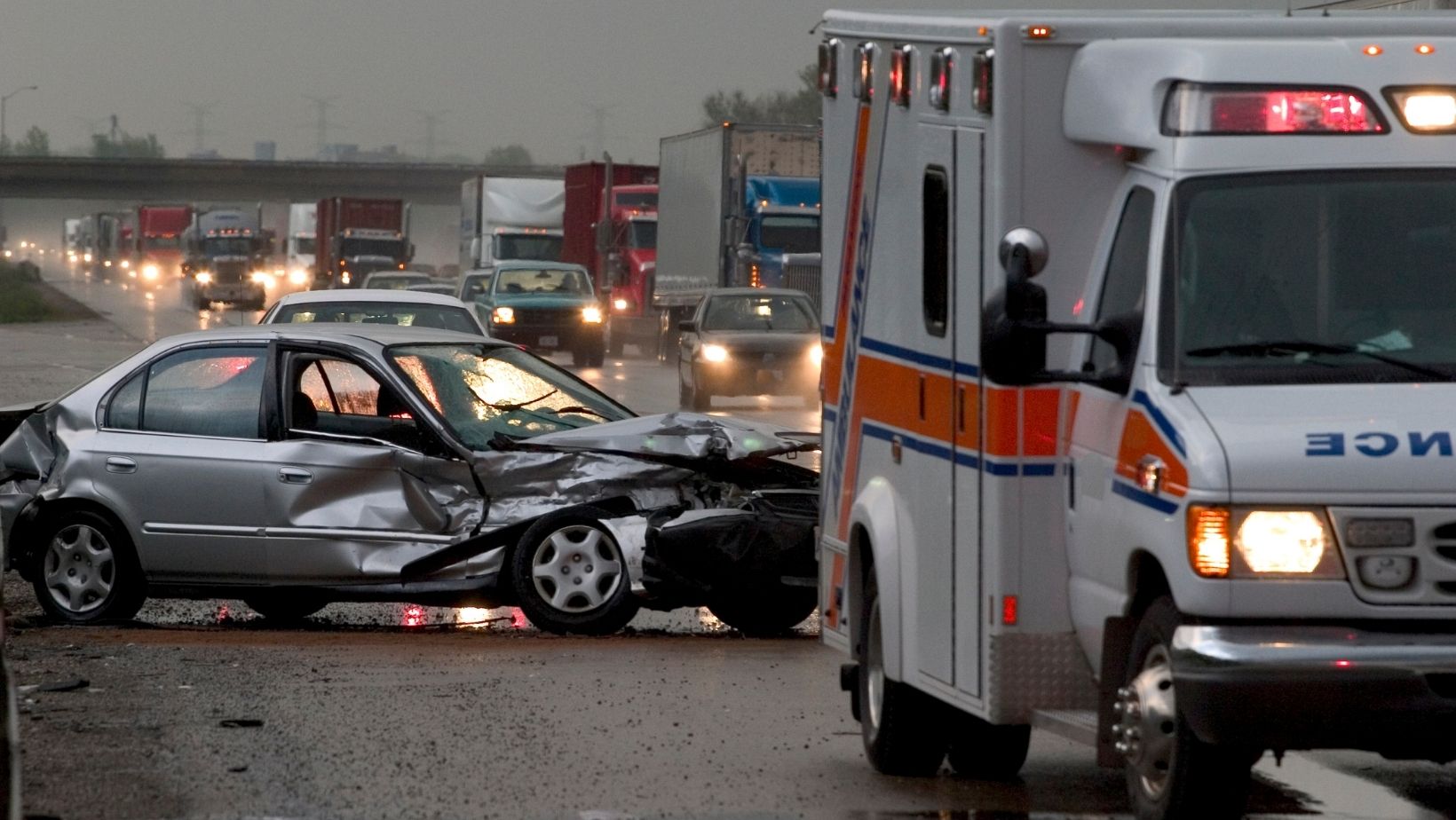
In some states with contributory negligence laws, any fault on the part of the injured party can limit or eliminate compensation completely. This is why it’s so important to build airtight cases that are nearly impossible to refute.
Strategies for Proving Fault in Auto Accident Cases
One of the first things to understand about building a winning auto accident case is that different accidents require different strategies.
There’s no one-size-fits-all approach to proving fault.
Whether there are multiple at-fault parties, it’s difficult to identify a negligent driver, or the accident was especially complex, the exact methods and techniques will need to be tailored to the specific facts and circumstances.
Below we’ll take a look at some of the most common strategies for proving fault in an auto accident.
Reconstructing the Accident
Sometimes it takes a professional to make sense of an accident. Accident reconstructionists study the physical evidence to figure out how a collision occurred.
They analyze vehicle damage, road conditions, skid marks, and more to determine the speed, direction, and angle of impact. This testimony can be extremely valuable in court.
Traffic Camera and Business Surveillance Footage
Intersections often have traffic cameras. Businesses and gas stations near the scene of an accident often have surveillance cameras on their property. All of this video can be a goldmine.
It can capture an accident in real-time and provide indisputable evidence of fault. The only problem is this footage often gets overwritten on many systems within a few days. Request it quickly.
Cell Phone Records
Distracted driving has become a major cause of auto accidents. If the at-fault party was texting or using their phone at the time of a crash, cell phone records can be compelling evidence.
Insurance companies and attorneys can subpoena this data from phone companies. It can show that the other driver was using their phone at the time of a collision.
Vehicle Data Analysis
Cars and trucks have something called an event data recorder or EDR. It’s similar to a black box on an airplane. This data can show things like speed, braking, and more.
In some cases, this objective evidence can be used to show that the other driver was speeding, distracted, or otherwise driving negligently at the time of the crash.
Expert Witness Testimony
A host of expert witnesses can be called upon to testify during auto accident lawsuits. Doctors and medical professionals can talk about injuries and lost wages.
Accident reconstructionists can explain how an accident happened. Economists can project future costs. Their opinions can carry a lot of weight.
Working with Auto Accident Injury Attorneys
Not every fender bender is going to require the assistance of an attorney. But complex auto accident cases with significant injuries, disputed liability, and high damages? That’s another story.
Insurance companies have whole teams of adjusters and attorneys whose job is to protect company interests by minimizing payouts. Put one of those teams up against an injured accident victim with no legal training or experience and who do you think is going to come out on top?
Working with legal services levels the playing field by:
- Thoroughly investigating accidents
- Gathering and preserving evidence
- Negotiating with insurance adjusters
- Preparing lawsuits for trial, if necessary
- Calculating full and fair compensation
The difference between handling an auto accident case alone and having experienced legal representation makes tens of thousands of dollars in the final settlement.
Final Thoughts
Proving fault in an auto accident is a complex process. It requires a solid understanding of negligence and all of the elements that must be proven to establish fault.
It then moves to the crucial phase of gathering compelling evidence like police reports, photos, medical records, and witness statements.
There are advanced strategies that can be deployed when needed as well, such as accident reconstruction, traffic camera footage, and analysis of cell phone records and vehicle data.
One other thing to keep in mind is that different auto accidents will require different approaches. One strategy that works perfectly in one case might be useless in another.
This is why complex auto accident cases tend to benefit the most from the guidance of legal services.
Acting quickly is also always advised since this preserves the best possible evidence.
Takeaways
- Elements of fault in an auto accident cases are relatively simple
- Evidence is the single most important part of any auto accident case
- There is no one-size-fits-all approach when it comes to proving fault
- Complex cases are more likely to require advanced strategies
- Expert legal services make the biggest difference in the most complex cases
- Acting quickly to preserve evidence is always advisable
Auto accidents are nearly always caused by the negligence of other people. The human error that leads to auto accidents is behind 94% of all crashes, by some estimates.
Proving that someone was at-fault and that someone else was injured is key to getting compensation for damages.
Those who approach the task with strategy and patience give themselves the best odds of collecting full and fair compensation.