
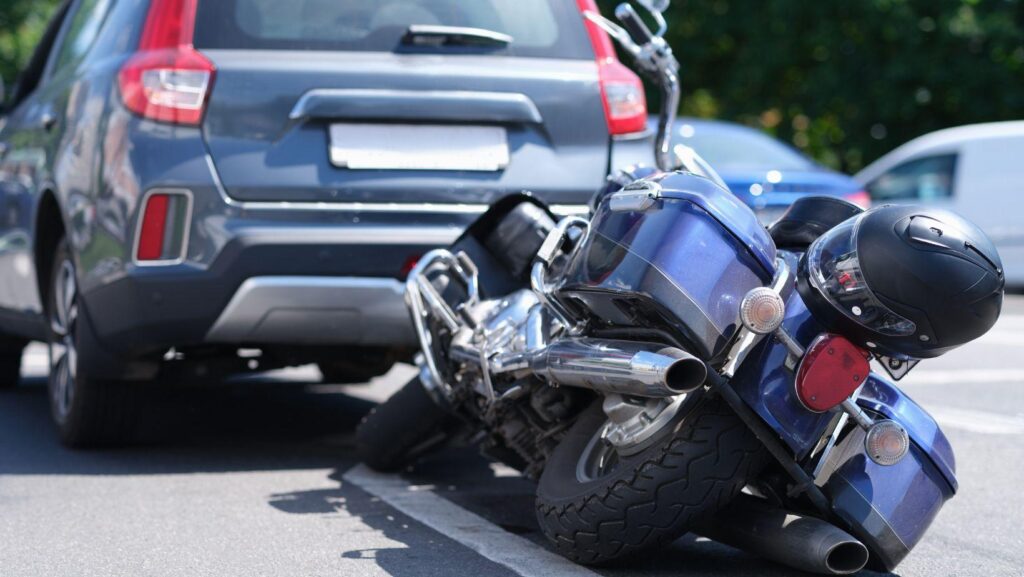
Drivers of all types can be a hazard, including those driving under the speed limit or braking unexpectedly. A vehicle traveling below the normal speed of other vehicles can be unexpected and catch other road users, including motorcyclists, off guard.
For motorcyclists who have less protection compared to other vehicle users, they are more prone to severe injuries when they get involved in accidents. In fact, the NHTSA puts the 2024 death rate for motorcyclists at almost 27 times the rate for passenger car occupants, measured per mile traveled.
High speeds are often the first thing people think of when hearing about motorcycle crashes. But in reality, crashes can also begin with slow or unexpectedly stopped traffic.
Why Slow Driving Is Its Own Kind of Dangerous
Traffic functions well when everybody drives at approximately the same speed. It’s the consistency that allows people to anticipate other drivers’ actions, make decisions regarding changing lanes, and act appropriately.
Disrupting the flow of cars may happen when there is a sudden reduction of speed. Riders following a car that suddenly slows may have very little time to react. Hard braking is riskier on a motorcycle than in a car. A locked front wheel can bring the rider down, and a locked rear wheel can cause a skid. A sudden swerve to avoid a vehicle can mean changing lanes without a proper look in the mirror. Both are risky, and a driver who slows for no good reason can trigger either one.
What the Law Actually Says About Minimum Speed
Most states express this rule in nearly the same way. Drivers generally cannot go so slowly that they block the normal flow of traffic. Exceptions usually cover safety concerns like bad weather or a mechanical problem. But these exceptions still vary by state.
California's version of this rule sits in its Vehicle Code. Anyone who wants to see how this works in practice can read more on understanding California's minimum speed law. It covers the ban on impeding traffic and the state's authority to post minimum speed signs. Even without a posted minimum, a general impeding-traffic law can still apply to a driver going far too slow for no reason.
A motorcyclist may have solid grounds to argue fault if a car traveled unjustifiably slowly and caused the crash.
Proving Fault When the Other Driver Was Too Slow
A slow driver is harder to pin down than a speeder, since a slow car may leave no obvious marks. Proof usually comes from reconstructing the moments before impact.
Dash cam footage is one of the strongest ways to show the slow car's speed relative to traffic. Other drivers' accounts of being slowed to a crawl can corroborate the rider’s experience. Traffic cam footage, available for certain roads, may capture the whole sequence of events leading to the accident.
Many newer vehicles also carry event data recorders that can log speed and braking before a crash. Without video evidence, an accident reconstruction expert can study the vehicle damage and other physical evidence to estimate speeds and braking.
Comparative negligence makes the issue even more difficult in jurisdictions that use this doctrine. For instance, a rider who tailgated may share fault even when the slow driver started the chain of events. In some states, being mostly at fault can bar recovery entirely. It is this issue among others that often makes it useful to have a lawyer who has actually dealt with a slow-speed accident before.
Riders in South Carolina face this same fault-proving challenge. In such cases, a motorcycle accident lawyer can help gather evidence like traffic camera footage and the police report.
What to Do If This Happens to You
A slow crash can leave little on the road, so your photos and any witness accounts may end up as the best record of how slowly the other driver was moving.
Call 911 and have an official report made, no matter how fine everything may seem. Take pictures of both vehicles involved, along with the condition of the roadway. Anything showing what factors led to traffic traveling at the speed it did, like brake lights, heavy congestion, or construction signs, can assist in backing up a claim. Get contact details from any witnesses, as they may be the only confirmation of how slowly the other vehicle was moving. Have yourself checked out by a physician, for both healing and legal reasons. A same-day medical report makes it harder for an insurer to dispute when your injuries began.
When people talk about road safety, crashes tied to slow drivers can get overlooked. A car creeping along doesn't seem as menacing as one doing ninety miles per hour. A driver who slams on the brakes for no reason two car lengths ahead of a rider is another matter.