
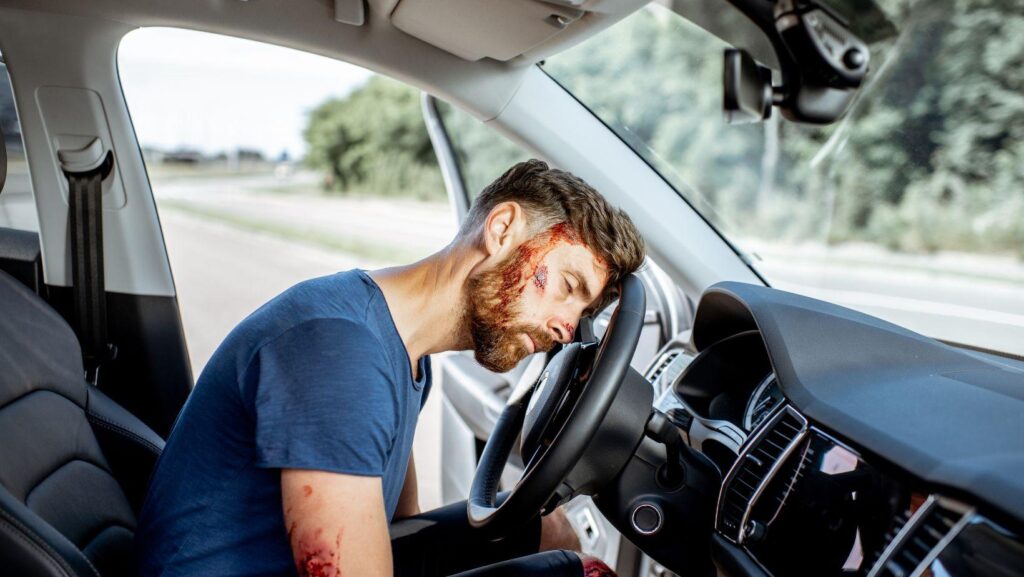
Families who suffer due to fatal accidents brought about by a drunken driver may be faced with deep sorrow, unforeseen costs, and complicated issues.
In America, according to NHTSA statistics, 11,904 individuals lost their lives in alcohol-impaired driving crashes in 2024, which accounted for about 30% of all traffic fatalities that year. On average, one life per 44 minutes was lost in such an accident.
But what happens to a wrongful death caused by a drunk driver? When someone dies as the result of a crash caused by an impaired driver, their family may have grounds for a wrongful death claim to recover for things like funeral costs, the loss of income support, and the loss of their loved one's company.
The steps for bringing a lawsuit vary by state. This variation means that who has the right to bring a claim and the required evidence differ across jurisdictions.
Familiarity with how wrongful death claims operate will allow families left behind to explore the avenues of legal action they are entitled to.
Who Can Bring the Claim
States write their own wrongful death laws so the people who are eligible to file are different across states. Some require the personal representative of the estate to bring the case on behalf of the survivors. Others let certain family members file directly. The list of relatives who can recover also differs, and so do the filing deadlines.
State laws regulate the procedure for bringing a claim for wrongful death from an accident involving drunk driving. The questions that family members have to answer while dealing with this matter include who is liable, whether one has the capacity to file a lawsuit, whether other parties will be liable too, how much compensation will be possible, and when a lawsuit must be filed.
Different states might require families to meet different conditions, but the issues they must take into account are almost the same.
Busy boroughs like Brooklyn produce a steady stream of cases where fault is often unclear, which is when families may turn to a car accident lawyer in Brooklyn to review liability.
One Crash, Two Cases
A fatal drunk driving crash sets off a criminal case and a civil case, and the two move independently. Prosecutors handle the criminal charges. The family, or the estate, brings the civil wrongful death claim.
The two cases also use different standards of proof. Under the Due Process Clause, the prosecution must prove a criminal defendant’s guilt, while a civil plaintiff has to establish that their claim is more likely to be true than not. The criminal standard of proof is beyond a reasonable doubt, while civil plaintiffs have a lower burden of proof.
A civil claim can usually move forward even if the criminal case ends in a plea to a lesser charge or an acquittal.
The criminal case can still help the family. Police reports, blood alcohol results, and crash reconstruction often end up in both proceedings.
Looking Beyond the Driver
The drunk driver is the obvious defendant, but not always the only one. Most states allow claims against a bar, restaurant, or other seller that served alcohol to someone who was visibly intoxicated or underage. These are often called dram shop claims, and the rules vary a great deal from state to state.
Other parties may also be involved. An individual who owns a car and lends it to an intoxicated person may be held liable. Another potential defendant is an employer whose employee is driving for work purposes.
Insurance decides how much money is actually available. A driver with low policy limits may have few other assets, which is one reason families and their lawyers look closely at every possible source of coverage.
What Damages Can Cover
Damages for wrongful death are meant to compensate the family for their losses. These losses may include the individual’s lost earnings, medical bills incurred because of the collision, funeral expenses, and the emotional and economic loss associated with the individual’s absence.
Most states also allow a survival claim. This kind of claim covers losses incurred by the victim between the collision and death. A survival claim may include medical expenses and, in some jurisdictions, pain and suffering.
Different states treat survival claims quite differently in terms of recovery.
In some states, families can seek other types of damages, like punitive damages, when the drunk driver’s conduct goes beyond ordinary negligence.
No amount of money undoes a drunk-driving death, but a civil claim can help recover the costs a family never saw coming and put the full facts of the crash on the record, often with evidence the criminal case helped uncover.